#Silicon Rubber Products
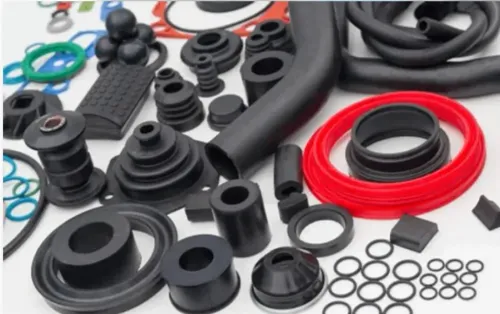
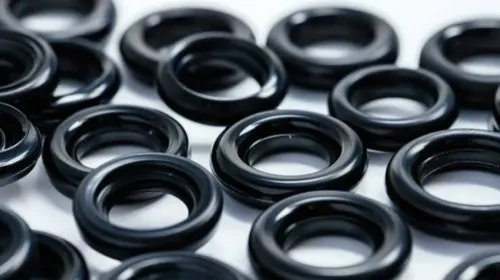
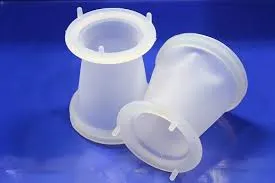
Since the 1960s, silicone rubber has found widespread use in medical, aerospace, electrical, construction, and industrial applications. Flexibility over wide temperature ranges, good resistance to compression set, a wide range of durometers, and inert and stable compounds are among the reasons for its popularity.
Temperature Resistance.Silicones can withstand a wider range of temperature extremes than nearly all other elastomers, remaining stable through temperature variations from –75° to 500°F. They can be sterilized via EtO gas, gamma or E-beam irradiation, steam autoclaving, and various other methods.
Chemical Resistance. Silicones resist water and many chemicals, including some acids, oxidizing chemicals, ammonia, and isopropyl alcohol. Concentrated acids, alkalines, and solvents should not be used with silicones.
Mechanical Properties. Silicone rubbers have high tear (to 250 ppi) and tensile (to 1500 psi) strength, good elongation (to 1250%) and flexibility, low compression set, and a durometer range of 5 to 80 Shore A. The softer forms of silicone have the ability to retain their softness indefinitely, with the softest durometers available in the form of reinforced gels.
Electrical Properties. Silicones exceed all comparable materials in their insulating properties as well as in their versatility for electrical applications. They are nonconductive and can maintain dielectric strength in temperature extremes far higher or lower than those in which conventional insulating materials are able to perform.
Keywords